
Event Report: Eighth IP & Innovation Researchers of Asia Conference, 29-30 January 2026 at Singapore University of Social Sciences, Singapore
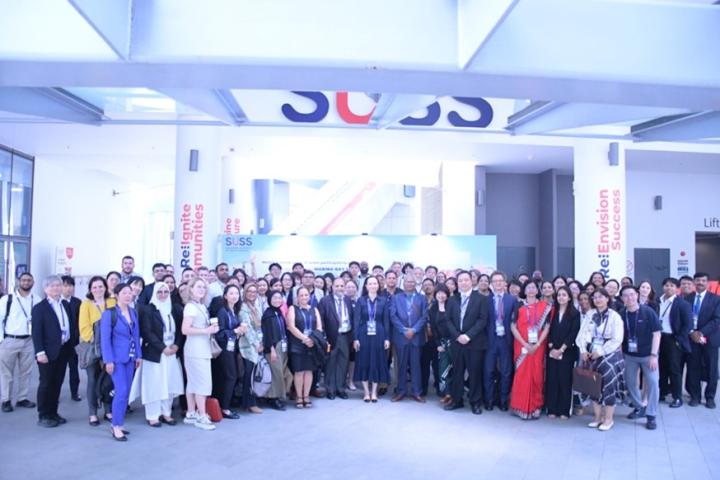
Our doctoral candidate at the IP Chair, Ngonidzaishe Gotora, recently presented part of his PhD research at the Eighth IP & Innovation Researchers of Asia Conference (IPIRA 2026), held from 29–30 January 2026 at the Singapore University of Social Sciences.
IPIRA is a leading international forum that brings together scholars, policymakers, and practitioners working on intellectual property (IP), innovation, and global development. The 2026 conference featured wide-ranging discussions on artificial intelligence, sustainability, access to knowledge, and the evolving role of IP law in addressing global challenges.
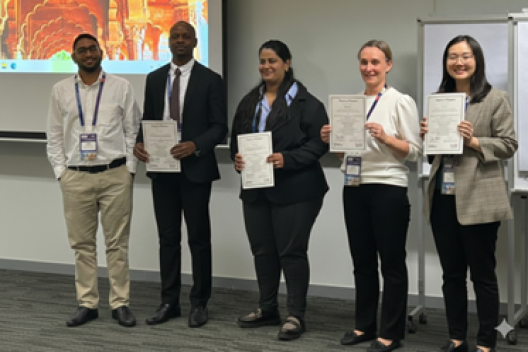
Ngonidzaishe presented his paper, “Ordre Public, Sustainable Innovation, and Climate Adaptation: Reinterpreting TRIPS through South African Constitutionalism,” which forms part of his doctoral research. The paper explores how patent law can be reoriented to respond more effectively to the climate crisis, particularly in climate-vulnerable countries such as South Africa.
A central contribution of the paper is its engagement with South Africa’s constitutional right to an environment that is not harmful to health or wellbeing under section 24. Ngonidzaishe argues that this right cannot be viewed in isolation from IP protection, especially where patented technologies shape pathways for climate adaptation, food security, water access, and environmental resilience. His research confronts the tension between the constitutional protection of (intellectual) property and the constitutional obligation to safeguard environmental and intergenerational rights.
Rather than treating these rights as being in conflict, the paper proposes a framework for reconciling them. Drawing on the ordre public provision in Article 27(2) of the TRIPS Agreement, Ngonidzaishe argues that patent law already contains doctrinal tools that allow states to steer innovation in socially and ecologically responsible directions. When interpreted through South Africa’s constitutional values, ordre public can function as a mechanism for ensuring that patents do not entrench technologies that undermine climate adaptation, exacerbate inequality, or lock societies into environmentally harmful trajectories.
The paper further situates this argument within broader debates on the ethics of innovation, showing how patent offices and courts inevitably play a normative role in signalling which forms of innovation are socially acceptable. By aligning patentability standards with constitutional commitments to environmental protection and sustainability, the research suggests that IP law can enhance, rather than weaken, its legitimacy in the context of the climate emergency.
Ngonidzaishe’s presentation generated engaged discussion among session participants on the responsibilities of IP systems in addressing climate change, and on how constitutional and fundamental rights can influence the interpretation of international IP norms.
Participation in IPIRA 2026 offered a valuable opportunity to share doctoral research with an international scholarly audience, receive constructive feedback, and contribute to ongoing conversations about how IP law can support sustainable innovation in a rapidly changing world.